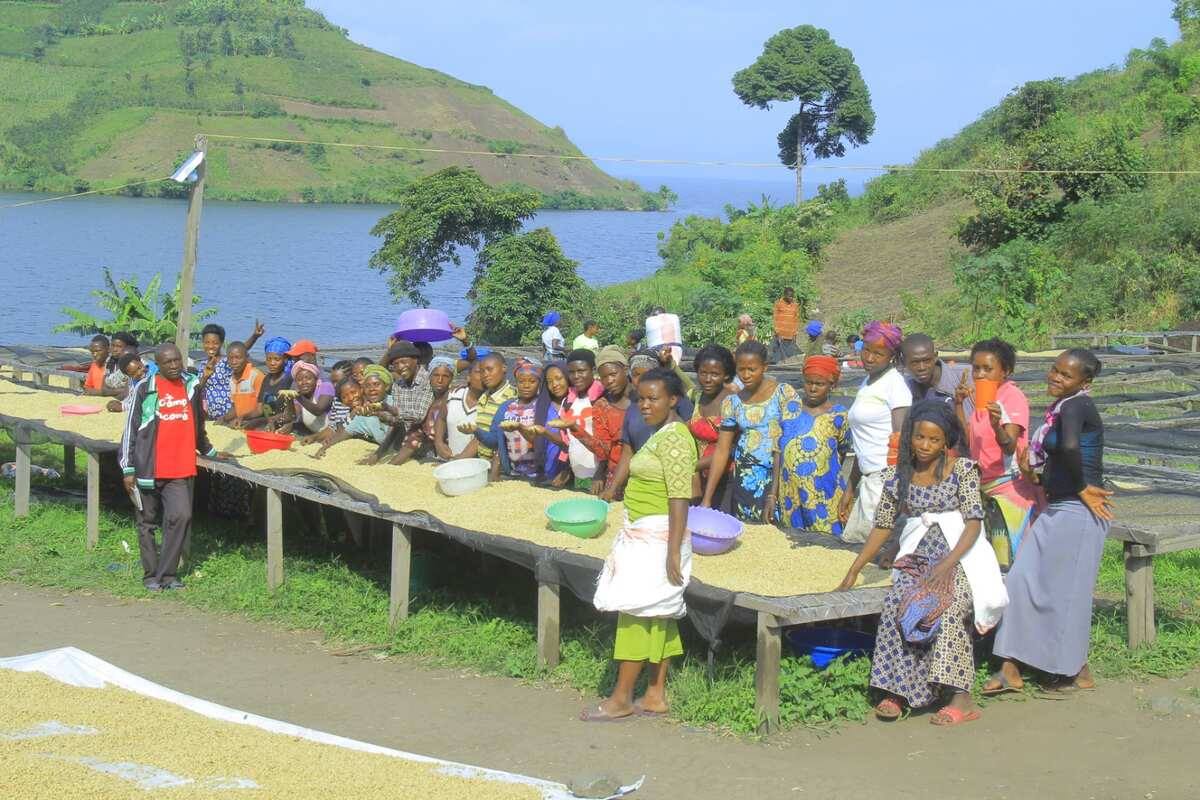
1,408 coffee growers across 16 sectors, 7 washing stations — Kalehe (South Kivu) and Masisi (North Kivu).
On average, each member cultivates 1/3 hectare of Bourbon Arabica coffee trees. 95% of members deliver fresh cherries to our washing stations, 5% carry out wet processing on the farm and deliver parchment.
Members come from several communities — Bahunde, Bahavu, Bashi, Batembo and Congolese of Rwandan origin — united despite past divisions. This diversity is a strength and embodies the vision of "Muungano" (unity in Swahili).
Each producer owns their coffee trees and manages their farm independently. The cooperative provides: fair market price, campaign pre-financing (via SIDI), agro-ecological training (Root Capital, USADF) and access to international markets.
3 women on the Board of Directors. GALS programme (Gender Action Learning Systems). Women's Coffee since 2016 with an autonomous premium of +20 cts/lb.
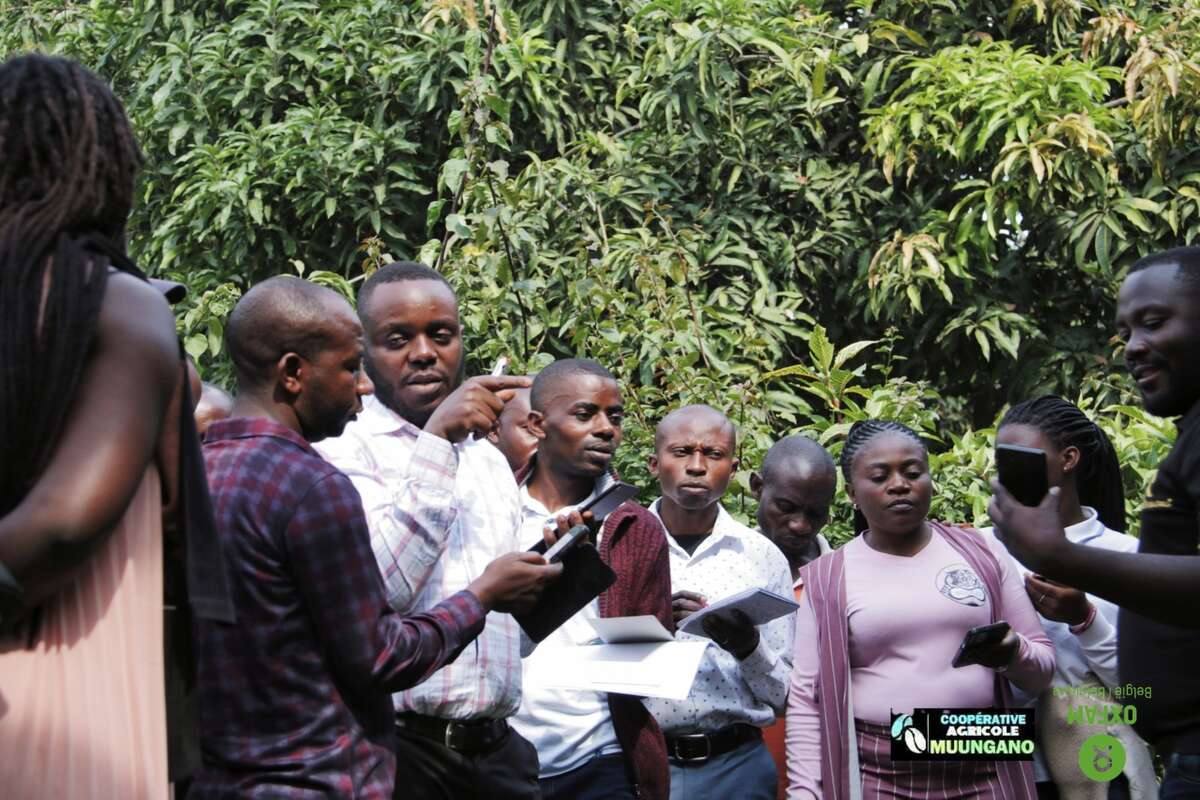
Including 3 women. Transparent governance. CEO: Daniel Habamungu Chinyabuguma. Good governance training by USADF.
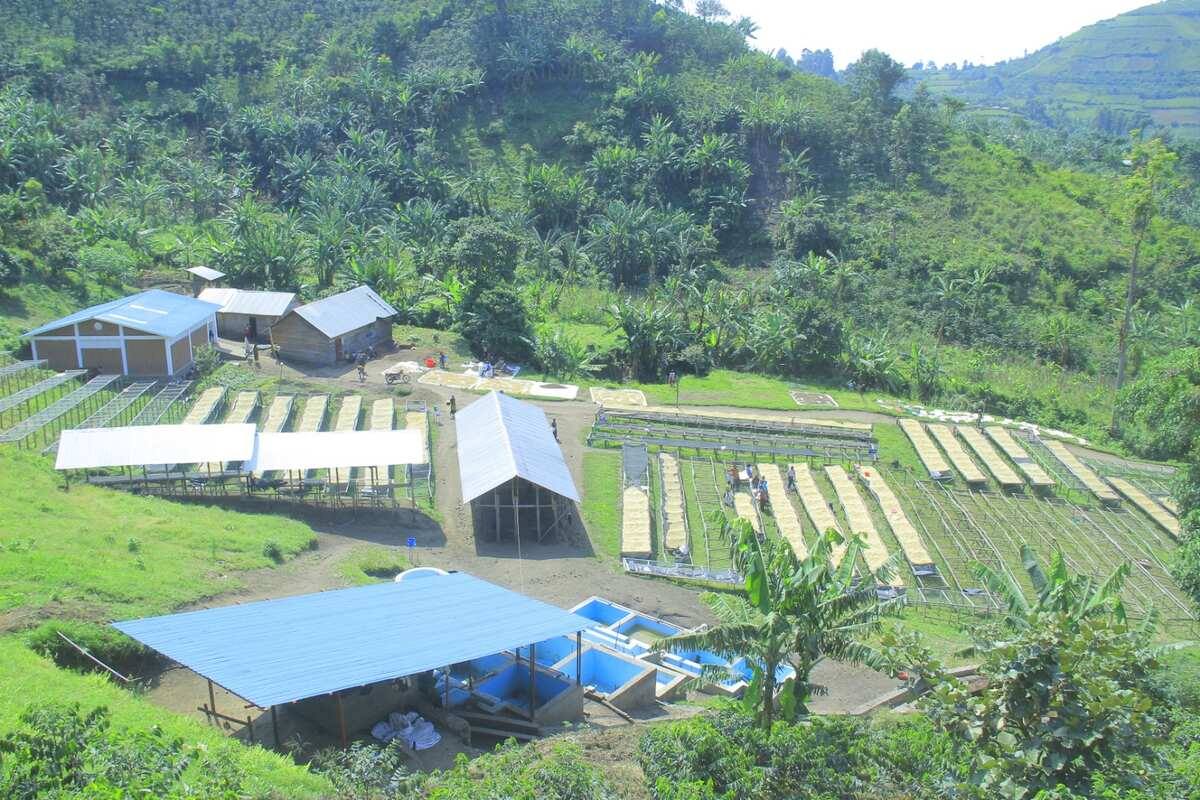
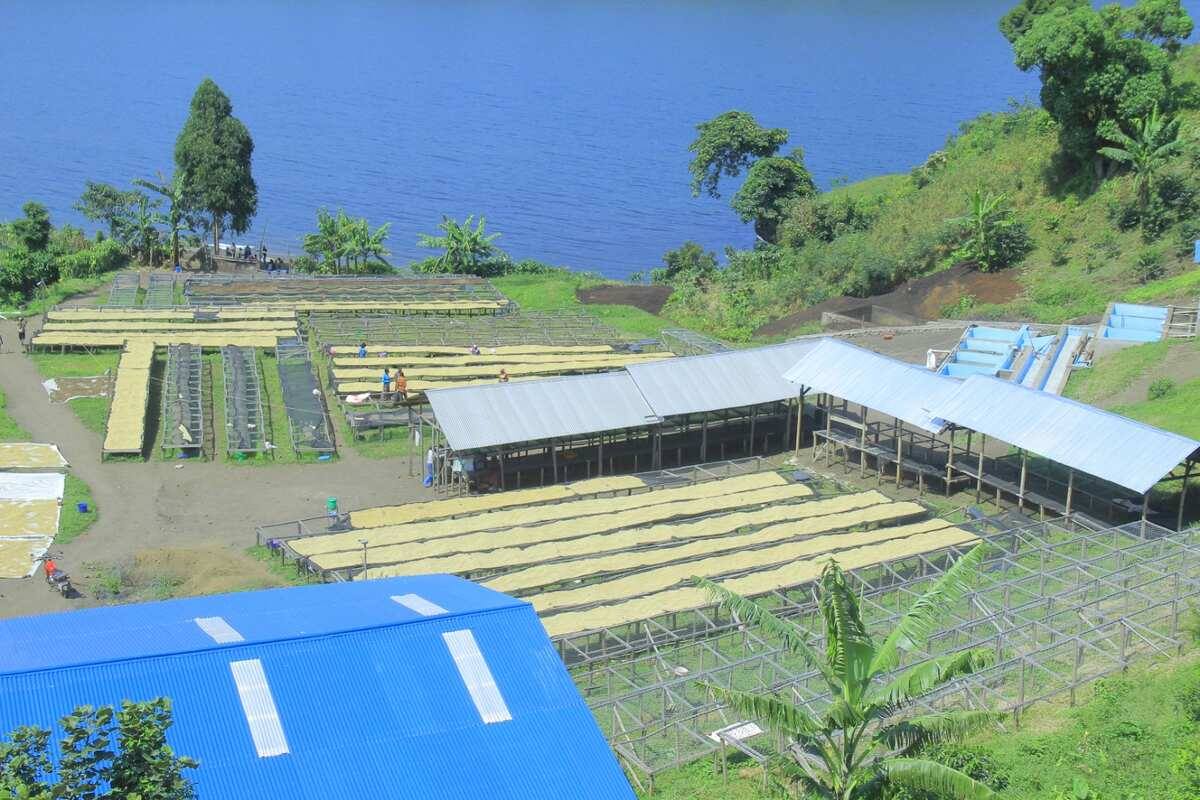
From renting an old colonial station in 2009 (Mukwidja) to 7 modern stations and a professional cupping laboratory.
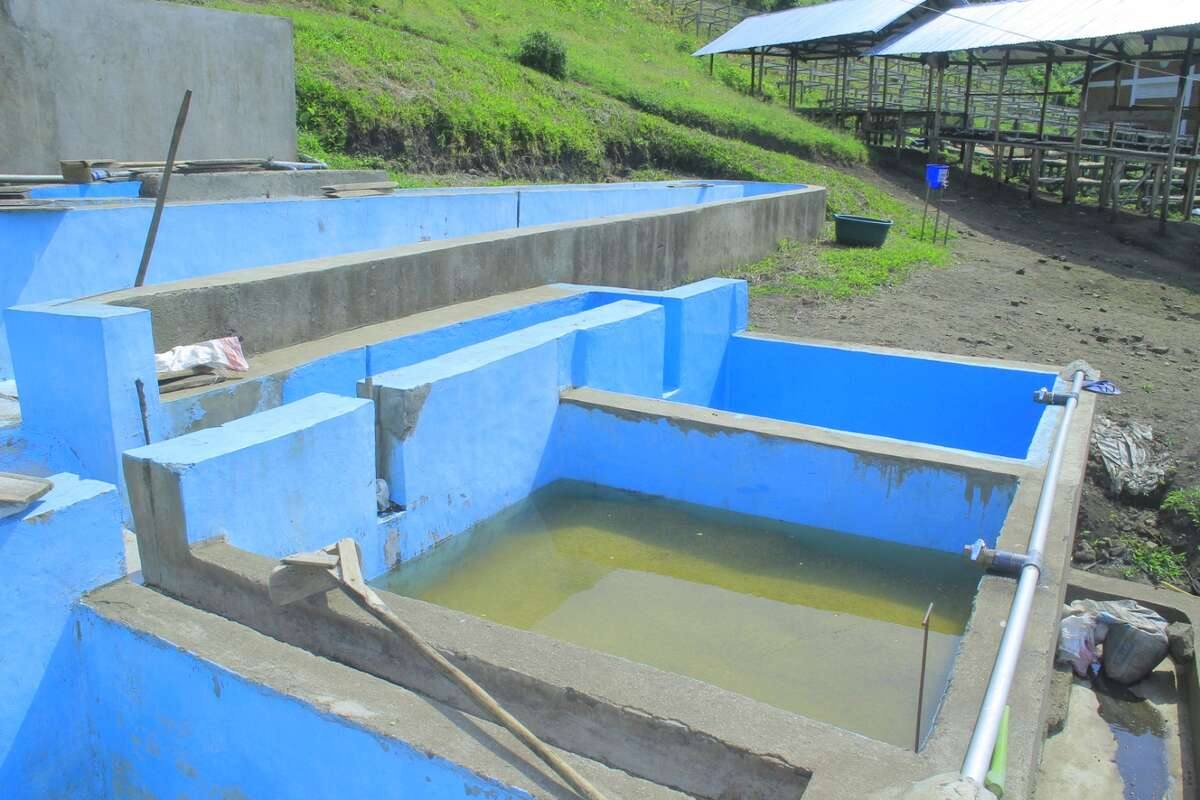
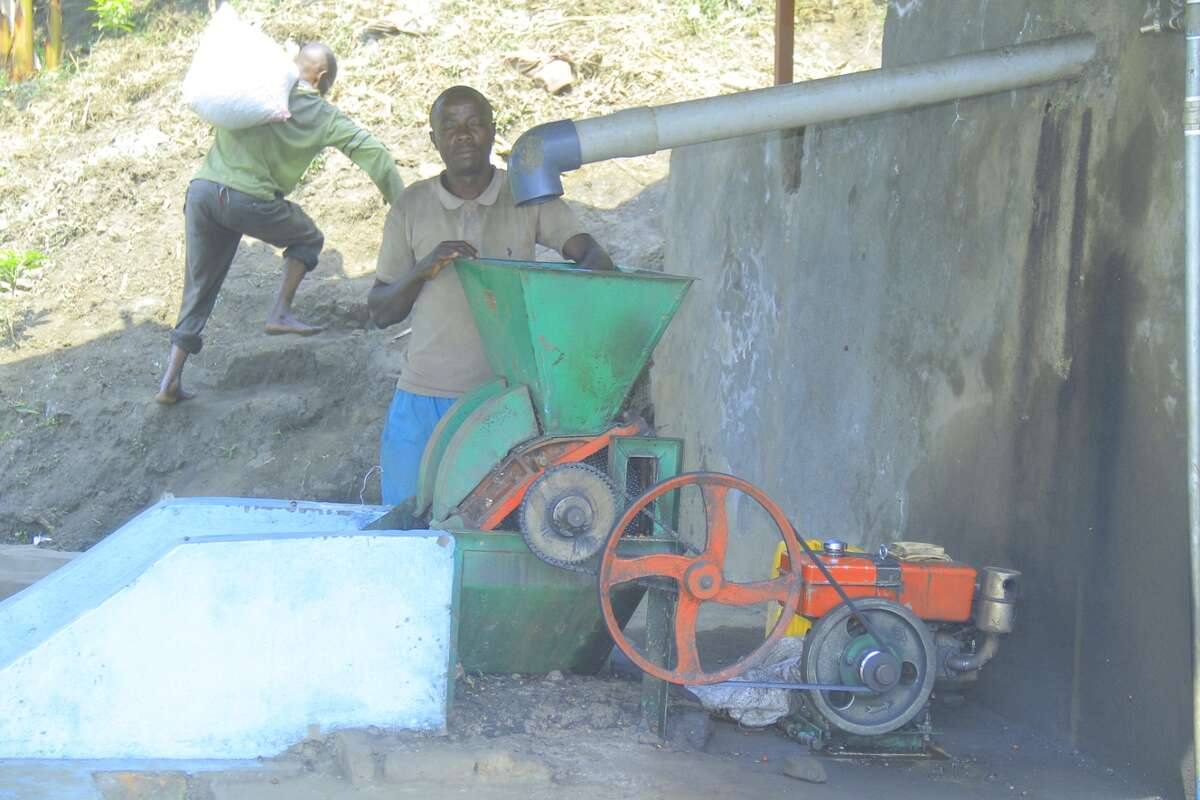
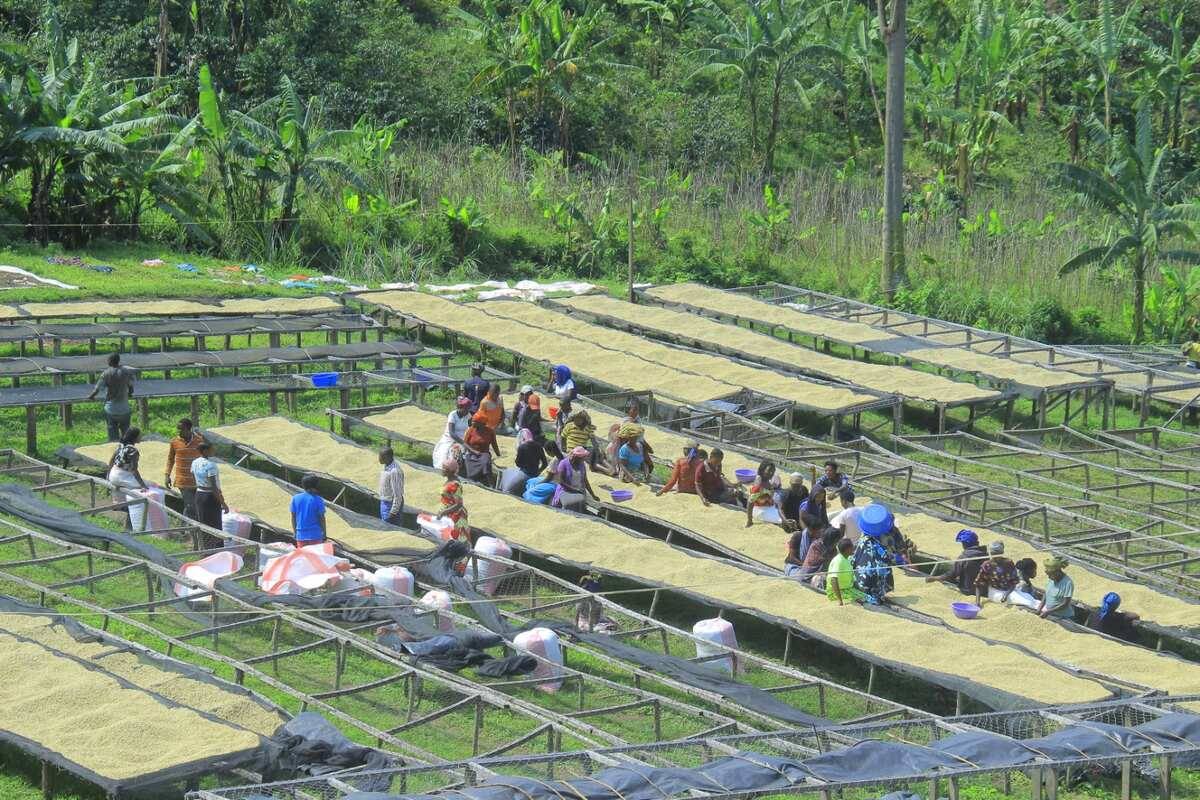
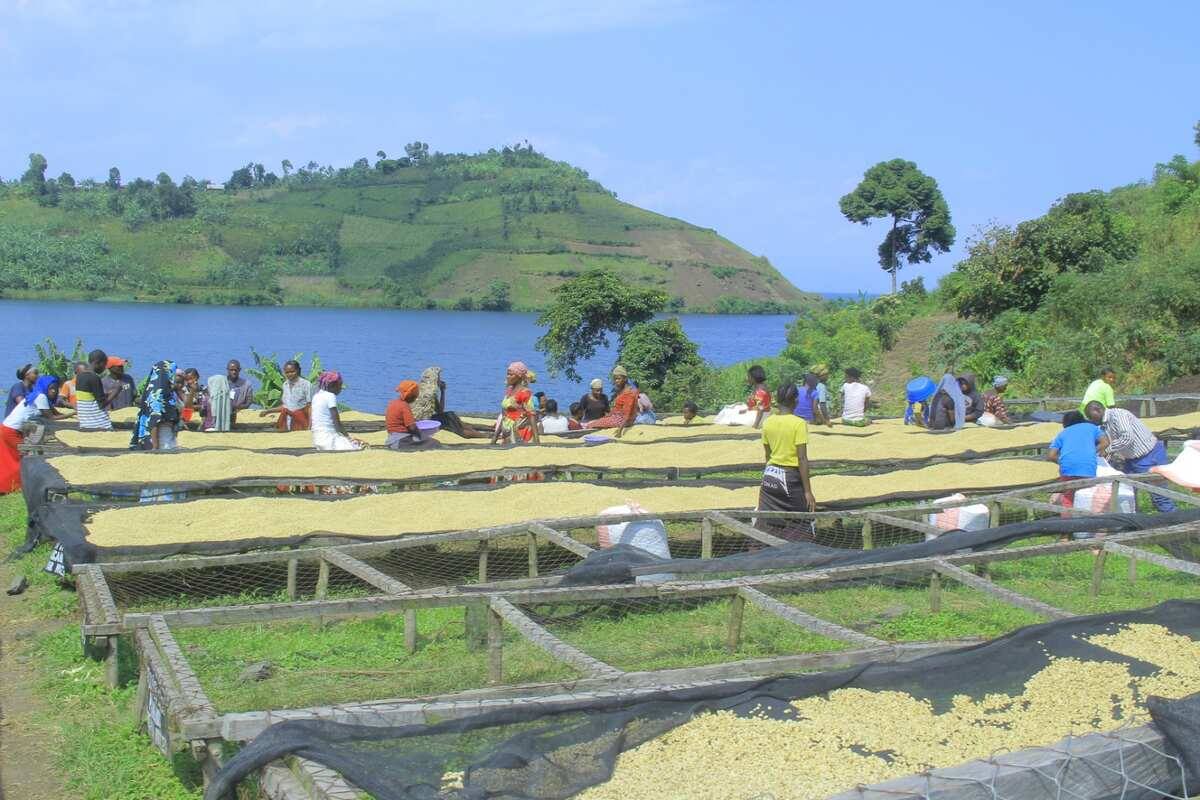
Each of our stations is equipped with modern pulping machines, fermentation tanks, washing channels and raised African drying tables.
Since 2016, lots produced exclusively by our women coffee growers are marketed separately with a premium of +20 cts/lb. This premium is managed with full autonomy by the Muungano Women's Committee.
The funded projects are chosen by the women themselves: dairy goat acquisition, maternal healthcare, GALS (Gender Action Learning System) training, scholarships.
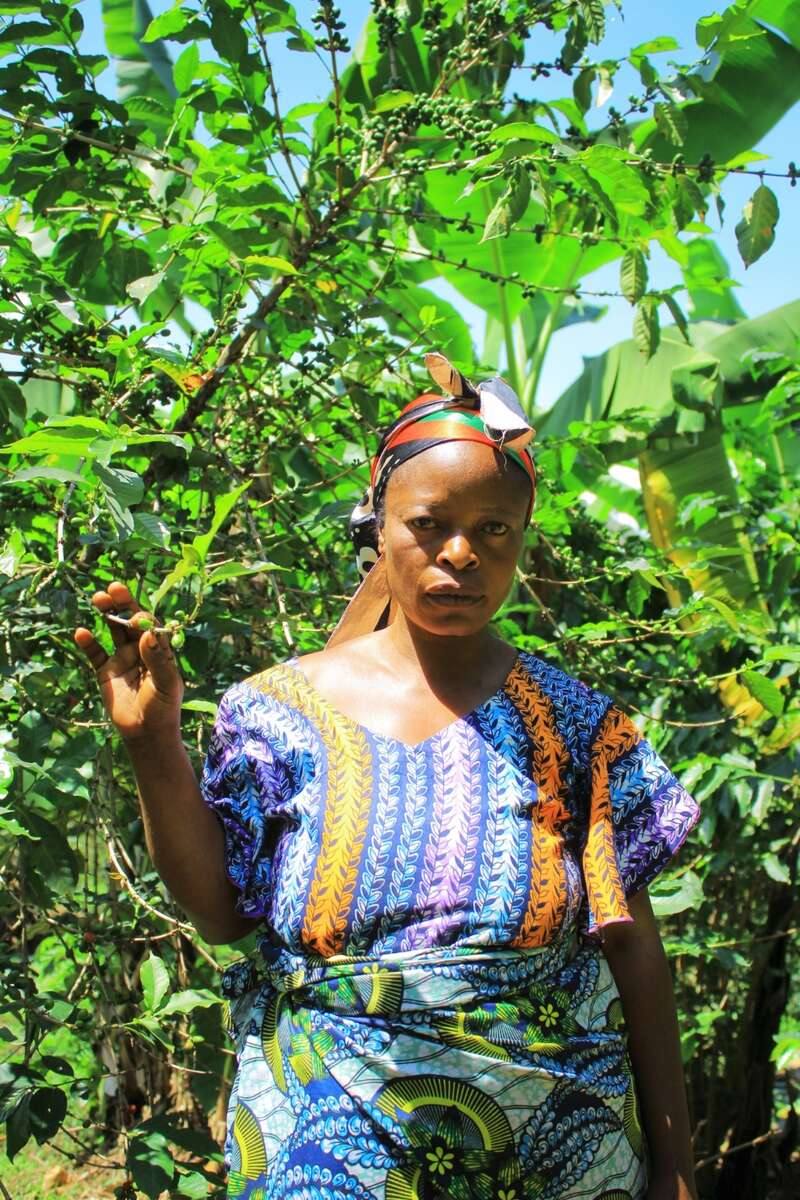
Agroforestry is at the heart of Muungano's agricultural practices. Bourbon coffee trees grow under the canopy of forest and fruit trees, recreating the optimal natural conditions for a quality Arabica.
This approach offers many advantages: natural soil fertilisation, erosion prevention on the steep slopes of Lake Kivu, income diversification through fruit production, and maintenance of local biodiversity.
Station wastewater is locally retreated. Cherry pulp is composted and redistributed to members as natural fertiliser. Anti-erosion channels are built on the terraces.
Grown by 1,408 passionate producers, our Bourbon arabica reflects the excellence of the Lake Kivu terroir.